What Actually Causes Frown Lines and Crow's Feet, and Why Botox Keeps Coming Up

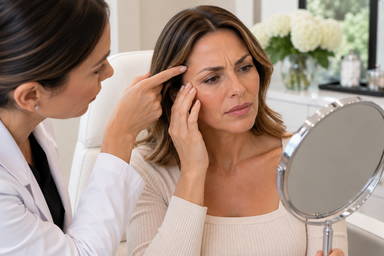
If you have ever caught a glimpse of yourself mid-conversation and noticed lines between your eyebrows or fanning out from the corners of your eyes that were not there a few years ago, you are seeing the direct result of thousands of small facial expressions repeated over time. These are called dynamic wrinkles, and they are the specific category of lines that Botox was designed to address. Understanding why they form in the first place makes it much easier to decide whether, and when, treatment makes sense for you.
This article covers what causes expression lines, how Botox works differently from fillers, and what Palm Desert, California patients should know before their first treatment. Updated this month for 2026 to reflect current dosing and treatment approaches.
What Is the Difference Between Dynamic and Static Wrinkles?
Dynamic wrinkles appear only when a muscle contracts, such as the lines that show up when you frown, squint, or raise your eyebrows. Static wrinkles are visible even when your face is completely relaxed, because repeated muscle movement over the years has eventually creased the skin itself. Botox is most effective on dynamic wrinkles, and when used consistently over time, it can also help prevent dynamic lines from progressing into static ones.
What Causes Frown Lines Between the Eyebrows?
The vertical lines that form between the eyebrows, often called the "elevens" or glabellar lines, develop from the repeated contraction of the corrugator and procerus muscles every time you frown, concentrate, or squint. Because these muscles are used constantly throughout the day, often without you even noticing, these lines tend to appear earlier than many other signs of facial aging.
What Causes Crow's Feet Around the Eyes?
Crow's feet form from the orbicularis oculi muscle, which contracts every time you smile, laugh, or squint against bright light. Palm Desert's sunny climate means many residents spend more time squinting outdoors than people in less sunny regions, which can accelerate how early crow's feet become noticeable, in addition to the natural thinning of skin around the eyes that comes with age.
What Causes Forehead Lines?
Horizontal forehead lines develop from repeated use of the frontalis muscle, the same muscle responsible for raising your eyebrows in surprise or concentration. Since this muscle is used almost constantly during conversation and other everyday expression, forehead lines are often one of the earliest dynamic wrinkles patients notice, sometimes appearing in the late twenties or early thirties.
How Does Botox Actually Address These Causes?
Botox works by temporarily relaxing the specific muscles responsible for these repeated contractions, which softens the lines that form above them without affecting your ability to express emotion naturally. Results typically appear within 3 to 7 days and last approximately 3 to 4 months, at which point the muscle gradually regains its normal activity and the treatment can be repeated. This is different from dermal fillers, which add volume rather than relax muscle activity, which is why some patients benefit from combining both depending on the type of lines they are addressing.
What Is Preventative Botox, and Who Is It For?
Preventative Botox refers to starting treatment before deep lines fully form, often in the late twenties or early thirties, with the goal of reducing repeated muscle contraction before it creases the skin permanently. This approach has become increasingly common as more people understand the difference between dynamic and static wrinkles, since addressing dynamic lines early can meaningfully delay the need for more significant treatment later.
How Is Botox Different From Dysport?
Both Botox and Dysport are botulinum toxin type A products used to relax dynamic wrinkles, but they differ slightly in formulation, dosing units, and how quickly they tend to take effect. Some patients respond better to one over the other, which is why an experienced injector will discuss both options rather than defaulting to a single product for every patient.
Who Is a Good Candidate for Botox?
Good candidates are bothered by dynamic wrinkles from frowning, squinting, or raising the eyebrows, are in good general health, and are not pregnant or breastfeeding, since Botox is not recommended during those times. Patients with certain neuromuscular conditions should discuss their full medical history with their injector before treatment to determine candidacy.
Getting Botox Done Right in Palm Desert
At Cosmetic Surgery Institute, our injectors take a conservative, natural approach to Botox Cosmetic, treating the specific muscles causing your concerns without freezing natural expression. We serve patients throughout Palm Desert, Palm Springs, Rancho Mirage, Indian Wells, and La Quinta. Learn more about our Botox Cosmetic injections, compare it with Dysport, or read more about what causes crow's feet and how Botox reduces them on our blog.
Stop Fighting Your Face and Start Working With It
Frown lines and crow's feet are not a sign that anything is wrong, they are simply the result of years of natural, repeated expression finally showing up on the surface. Whether you are curious about starting preventative treatment or ready to address lines that have been bothering you for a while, schedule a consultation with Cosmetic Surgery Institute in Palm Desert, California, to talk through your options.
Frequently Asked Questions
How long does Botox last? Botox typically lasts 3 to 4 months before the treated muscles gradually regain their normal activity. Consistent treatment over time can help extend results and may reduce how quickly lines return.
At what age should you start getting Botox? There is no universal age. Some patients start in their late twenties or early thirties as a preventative measure, while others wait until dynamic lines are more noticeable. The right timing depends on your individual concerns and goals.
Does Botox hurt? Most patients describe the injections as a quick pinch rather than significant pain. The treatment itself takes only about 10 to 15 minutes with minimal discomfort.
What is the difference between Botox and dermal fillers? Botox relaxes the muscles responsible for dynamic wrinkles like frown lines and crow's feet, while dermal fillers add volume to areas that have lost fullness, such as the cheeks or lips. Many patients use both, depending on their specific concerns.
Can Botox prevent wrinkles from forming in the first place? Botox cannot prevent all wrinkles, but by reducing repeated muscle contraction in specific areas, preventative treatment can slow how quickly dynamic lines progress into permanent, static wrinkles.